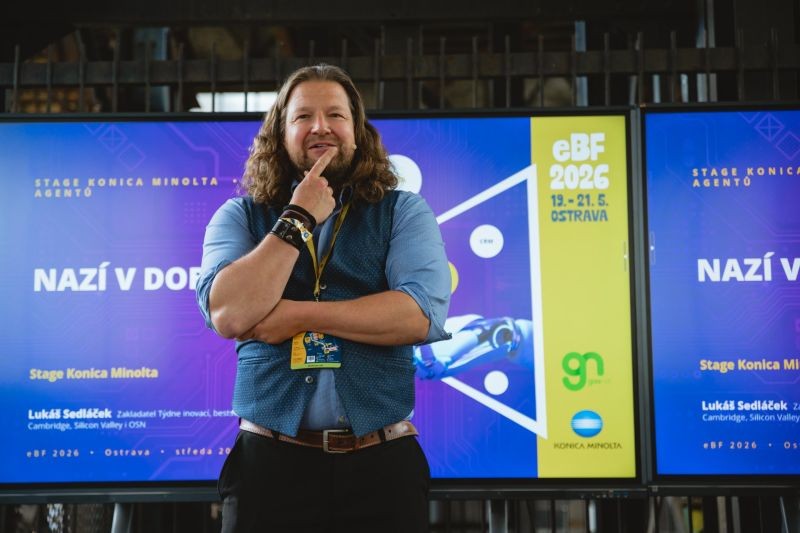
AI is usually discussed in connection with innovation, automation and personal productivity. In his morning talk, “Naked in the Age of AI”, Lukáš Sedláček approached the topic from a much broader perspective. He explored the question of meaning in the face of this new technology, spoke about how AI reflects our desires and ideals, and how people are already projecting even their religious ideas onto it. He concluded with a prediction: the top leader of the future will not only master AI tools, but will also be able to fully develop what is specifically human — both in themselves and in their teams: the ability to create meaning, make ethical choices and show genuine care for others.
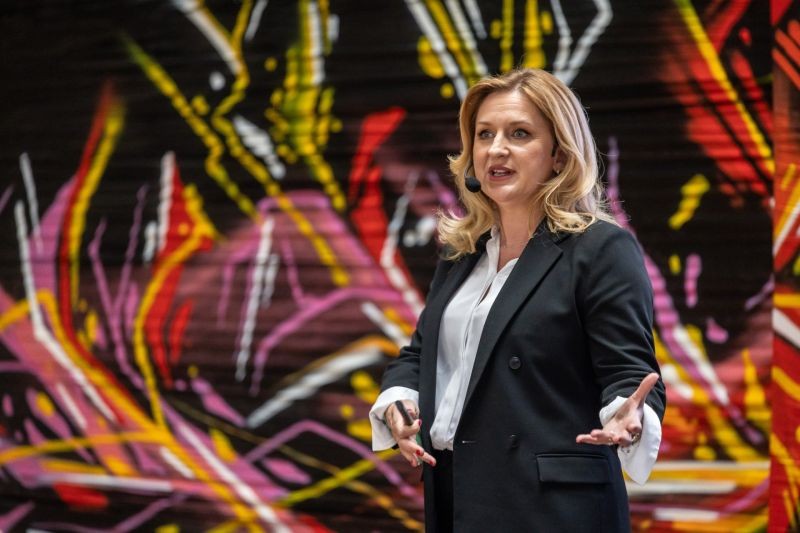
On Wednesday morning, one of the programme sessions took place in the industrial setting of a former compressor hall and featured moderator and journalist Terezie Tománková. She spoke about the tools that work in communication with other people, but also about situations where communication breaks down completely. When asked what makes a good politician, she often points to Winston Churchill as an example — a leader who built much of his success on the art of rhetoric. But success also depends on the ability to argue effectively, and we should not forget authenticity either. No perfectly rehearsed phrase or gesture can replace it.
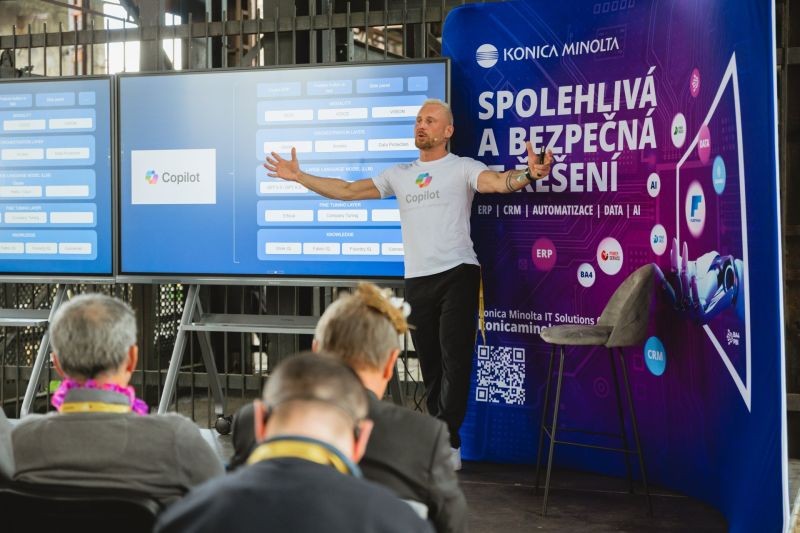
At this year’s eBF, Jaromír Šponar offered an overview of the key AI trends of 2026 and, above all, what they could mean for the future of procurement. Automation will take over part of the routine workload, while the ability to interpret data, work with AI, validate its outputs and make high-quality decisions in a broader context will become increasingly important. At the same time, new legal, security and ethical risks are emerging. This makes it all the more important to distinguish genuinely useful technologies from AI hype and to focus on solutions that deliver measurable value.